We are excited about the sheer force of nature we hope to witness here. The Bay of Fundy, on New Brunswick’s Atlantic Coast, is at the northeast end of the Gulf of Maine. Campobello Island, FDR’s summer home, is one of the many islands in the bay. Fundy Bay has one of the greatest tide shifts in the words—often to 47 feet between high and low tides. A high of 70 feet was recorded was recorded during a storm. It’s a finalist for one of the 7 Wonders of Nature. Canada actually generates electricity from one location but environmental problems have stopped expansion of this program.
We made camp in St. John expecting to visit the St. John river that reverses its flow when the tide changes. Locals in town told us it’s in an industrial area and not so great visit so we just walked around town. We camped at the Rockwood RV Park—just basic utilities and gravel—but it was nested in a huge urban park where we hiked with the dogs and totally got lost in the car.
We’re in the southeast corner of New Brunswick, where a narrow isthmus connects this province to the Nova Scotia peninsula. Because this creates an restricted shape to the Bay, the tides are the most extreme in the world—up to 52 feet. We searched tide charts to plan tomorrow as we visit St. Martins so we can see the tidal shifts for ourselves. Then we’ll drive Fundy Trail.
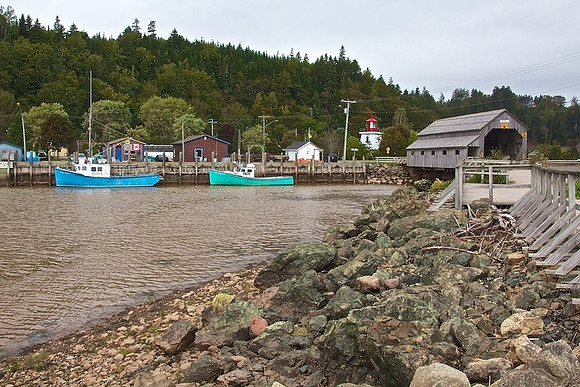
Our first stop were the twin covered bridges over the Irish Creek River at Hardscrabble and Vaughn Creek. In St. Martins.
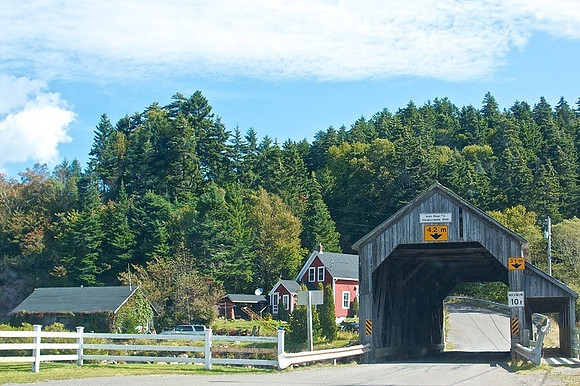

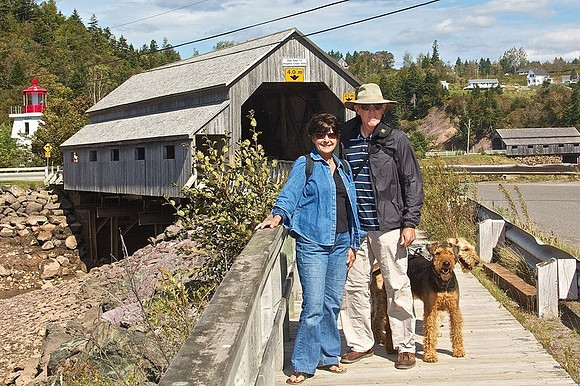
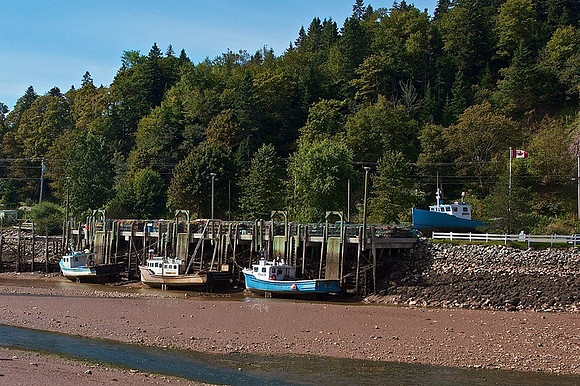
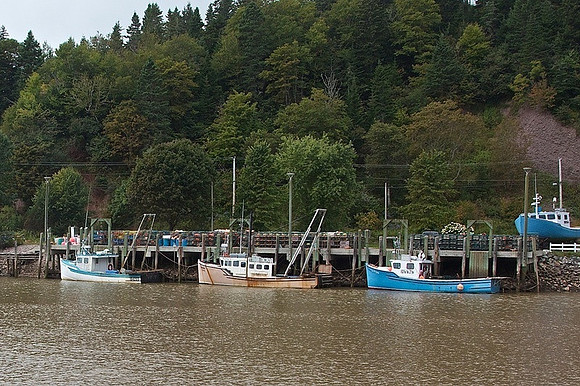
They were beautiful, but even more fun were the fishing boats nestled in the mud—we hit the area at almost the perfect low tide! They regularly see a 30-foot tide change here!
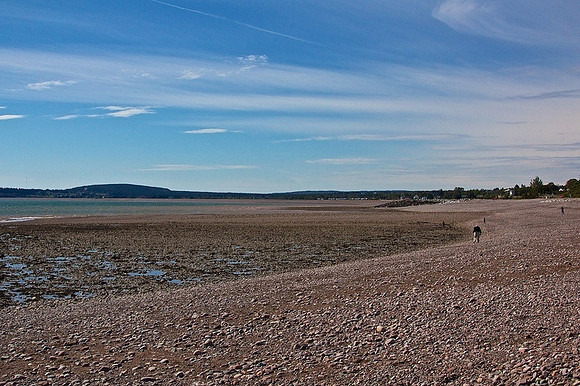
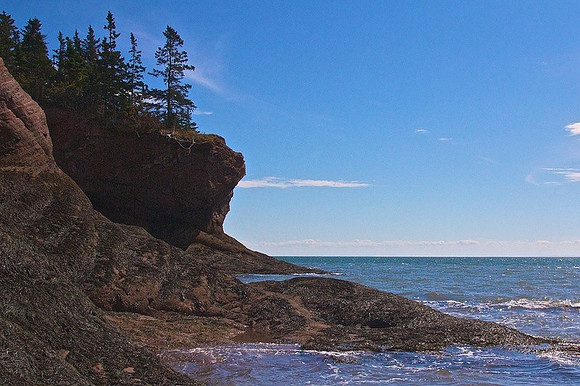
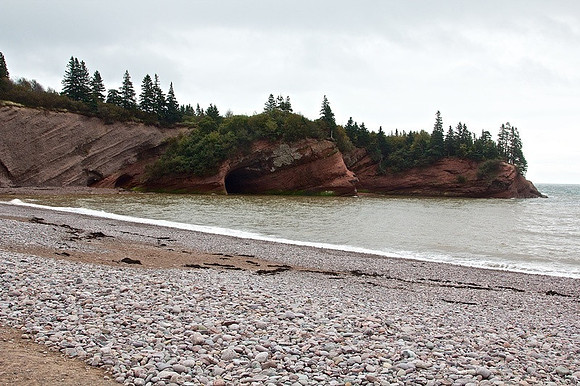
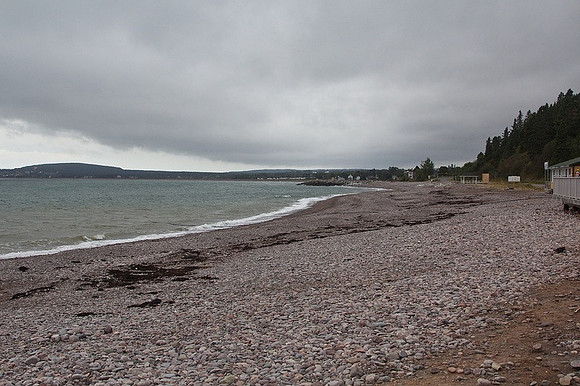
About a mile down the road we found the wondrous sea caves beside a very wide crescent beach. Hard to believe this will all be under water in a few hours.

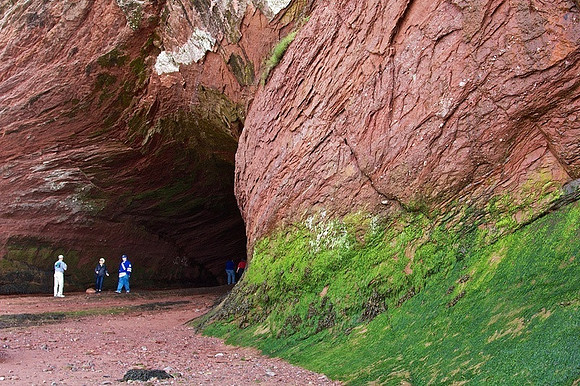
Carved from the sandstone by the tides, caves form the side of the cove. They are continuously changing and a delight. We scampered across a small steam and over rocks to enjoy the area while we could. It was obvious the tide was beginning to come in and in about 6 hours the caves would again be under water.

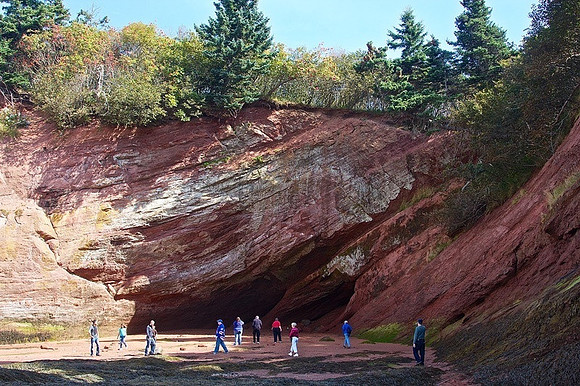
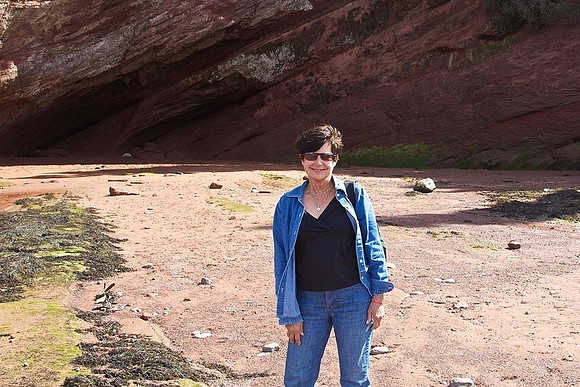
The algae on the rocks was almost fluorescent.
Then we walked out on the rocks covered by seaweed, giving us a better idea of the volume of water about to roll in.
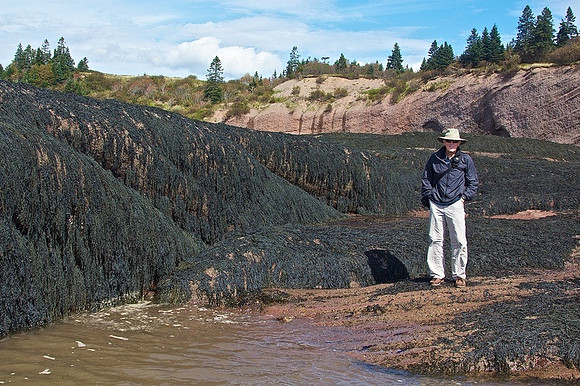
And we got a dramatic view of the changing tides really mean to the coast.
We caught a quick lunch at The Caves Restaurant. Really fresh fish and great chowder. And it was packed…the only restaurant at a tourist hot spot in the middle of nowhere.
From the caves, we headed off for the 10-mile drive around the Fundy Trail Parkway.
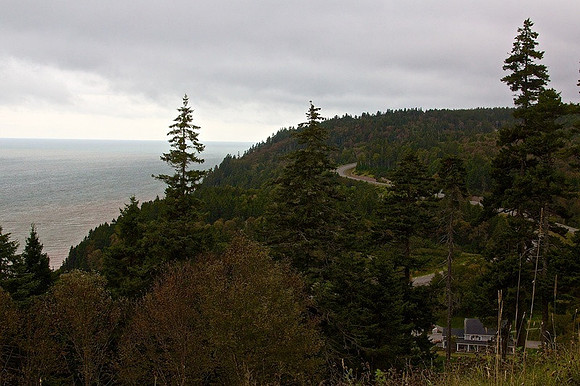
This drive overlooks beautiful coastal vistas, one after the other.
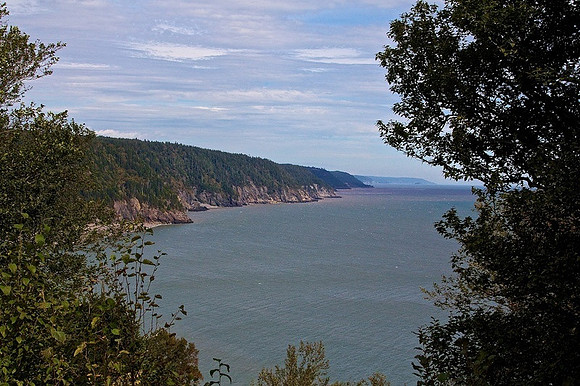
The road twists and turns along the coast and has lookouts where you can stop to enjoy the view.
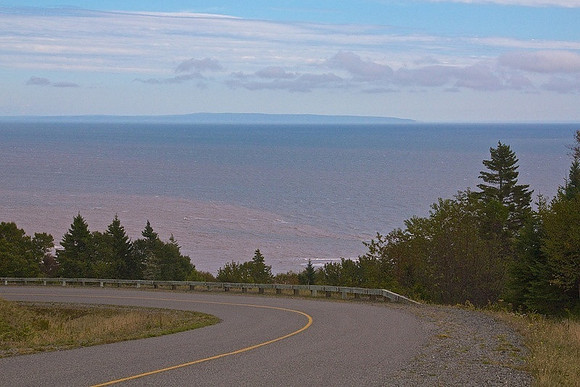
We had a bird’s eye view of Melvin Beach.

We hiked when we got to the mouth of the Big Salmon River. Once a famous fishing location, the salmon are now just about gone.
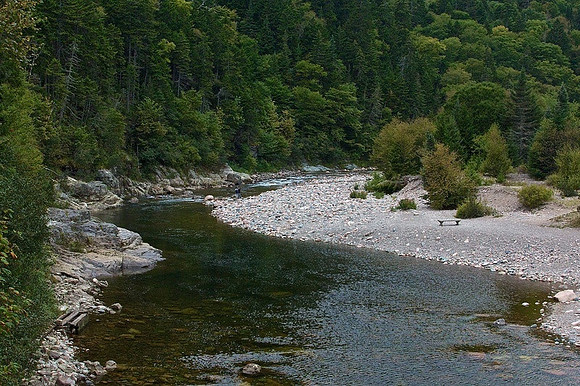
We made our way to the suspension bridge that stretched more than 250 feet over the river. The Fundy Trail consists of walking, hiking and driving options to see the sights. The bridge ia part of the footpath.
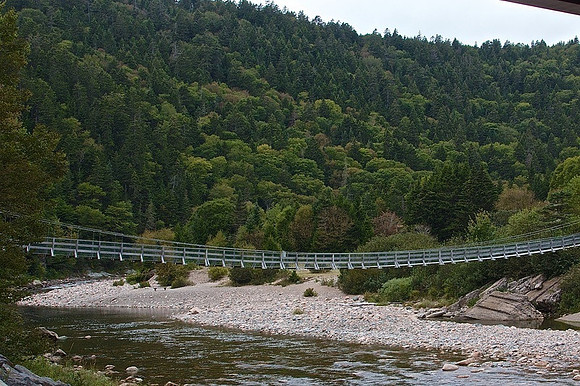

At the mouth, where the river meets the Bay of Fundy, tides have produced a rocky beach and a rugged coast.
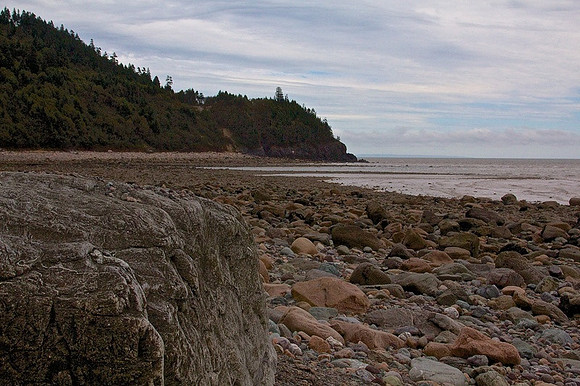
Back on the road, with clouds rolling in, we still loved the fantastic overlooks, like this view of Long Beach.
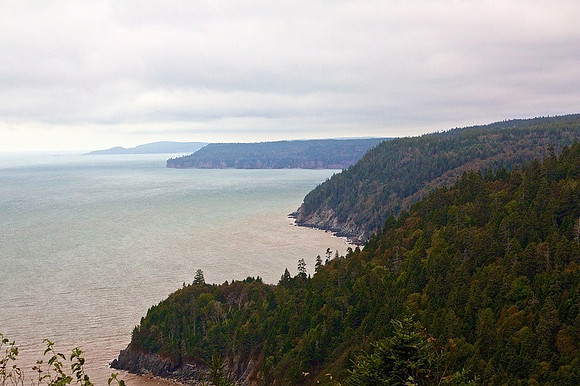
Including a great view of the winding trail, just above Big Salmon River.
We made it back to the Caves Restaurant about 5 hours later and the water had already come up well past the caves we walked in that morning.
And the beach that stretched the length of several football fields from the Caves restaurant to the water before we hit the Trail, now it was less than 50 feet away. It would soon be tickling the restaurant support pillars.
Back in the harbor, the same fishing boats were now floating free. Gives new meaning to watching the tide roll in.
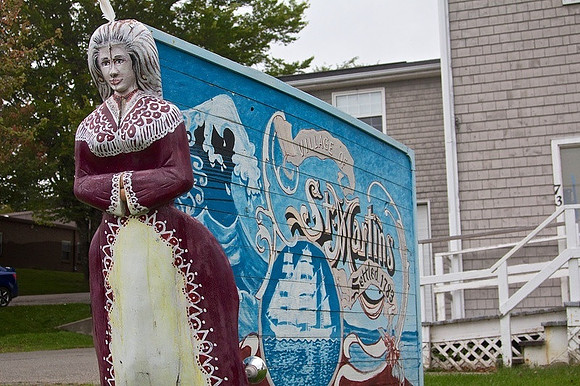
As we head back to St. Johns, we couldn't resist sayin good bye to this fantastic area by at the sign for the Village of St. Martins, estab.1783.
Tomorrow we head back to the States and our last sightseeing stop…Maine's Acadia National Park.

