Today, as we set out to the higher area of the park, our big treat is the people. On Wednesdays, Pilgrims from all over the area come to the park to visit old shrines. Many villages had to move from the park over the last few years to give the tigers a protected area. Many walk the long road into the park most Wednesdays--women in their finest dress, men and children, to worship at their old family temples. Others cram into covered jeep-like cars. Often the jeeps carry 15 people! Others ride motorcycles...some with children on the handlebars and two more people behind the driver’s seat. And these roads are no easy ride--they are full of potholes. The government has found if the roads aren't kept up, traffic slows and the animals are more protected than using speed humps. So…between the animals and the road, driving becomes an adventure.
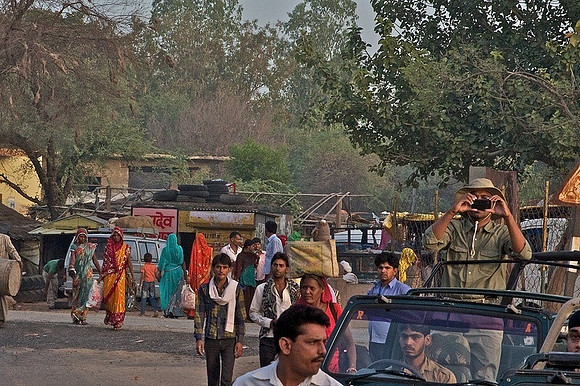
The Ranthambhore Park gate was a mass of brilliant color on this religious day.
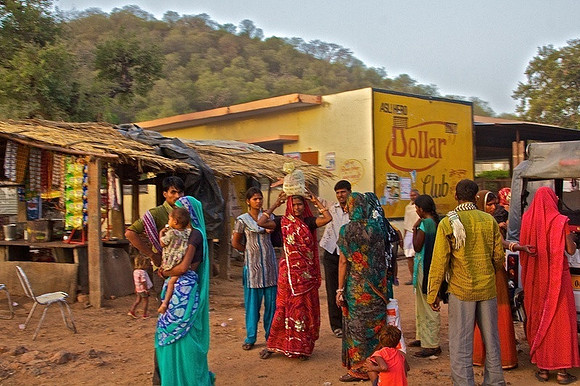

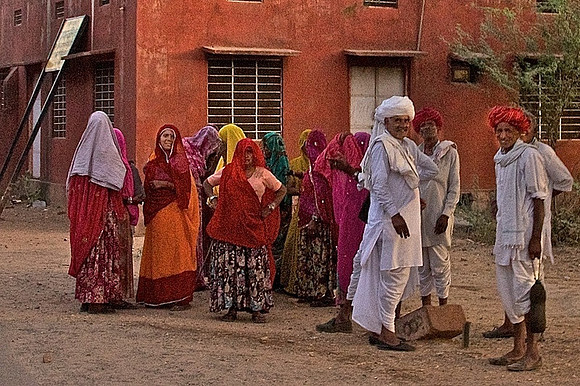
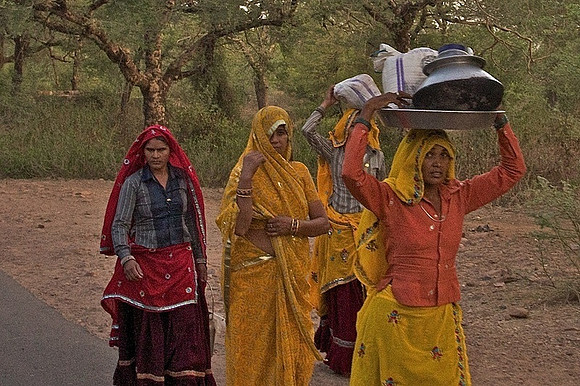
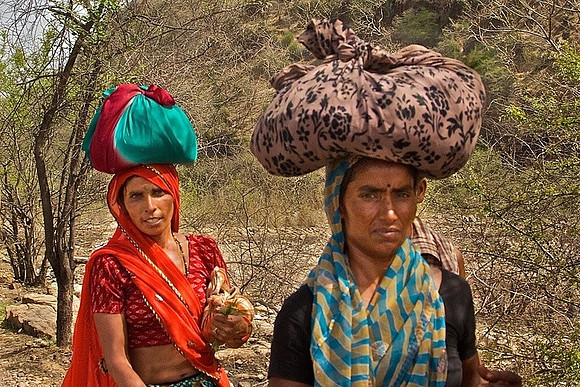
Driving down the road we captured some wonderful faces of India.

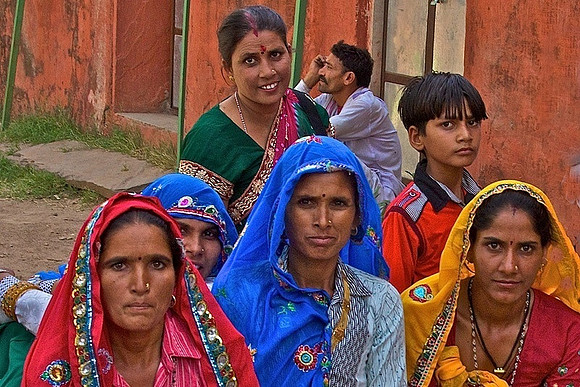
Women carrying food and pots for the day's meals...
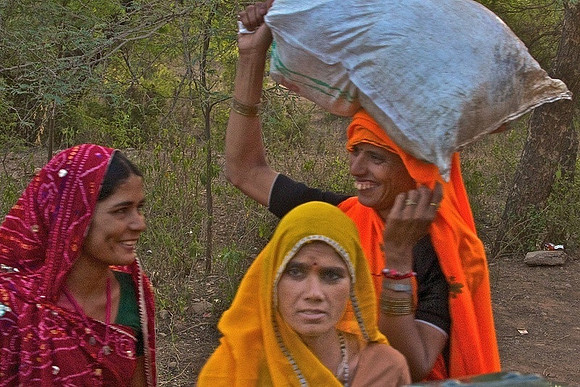
And some were just as interested getting our picture, too.
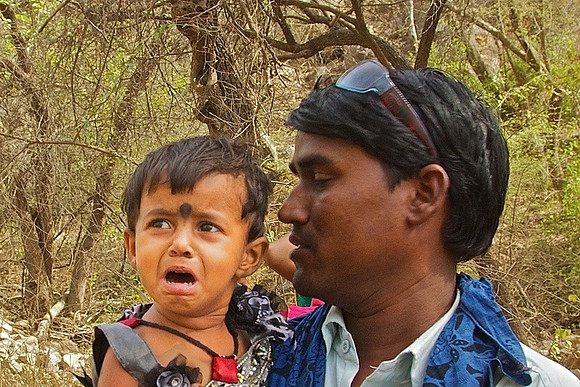
And we loved the children—

While the adults enjoyed having their pictures taken, the babies almost always seemed scared as their parents pushed them toward the camera.

Because we had such great luck finding tigers previously, others in our group went to the prime tiger regions today. So we concentrated on people watching.
I'd love to know the stories these people hold....


Inside the park we saw more Ranthambhore sights.
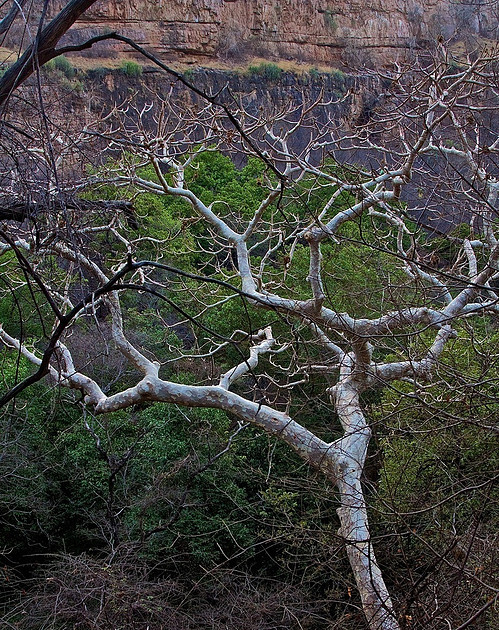
Like the Ghost Tree. The Kullu gum tree is a stark, white tree totally devoid of leaves when Ranthambhore is dry. As you can imagine, this is most of the year. So how does it make food without leaves? Researchers finally determined this unique tree has chlorophyll in its bark, allowing it to make food—to survive—even when it has no leaves.
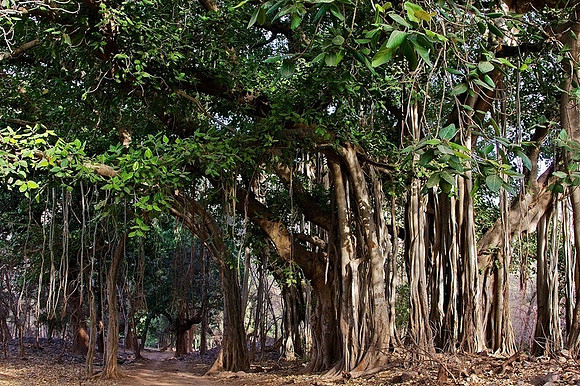
The banyan tree, puts out air roots and can grow into mega-trees, so big they can cover both sides of a road. One tree can look like a whole 'grove."
We also saw how a tree will grow a maze of roots down a rock cliff to support itself on the barren rock above. Supreme adaptation.

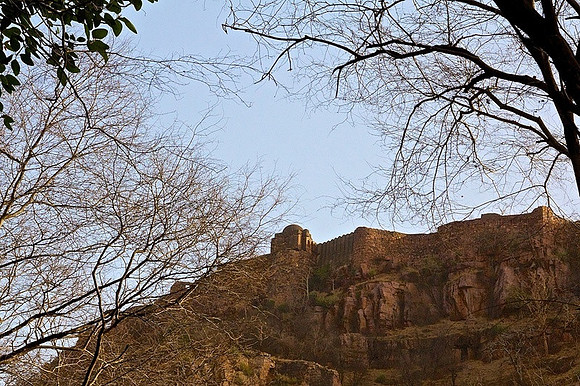
We had a great view of the fort at the top of the park. This belonged to the Maharajas of Jaipur and the park was his personal hunting ground until Indian Independence. We hope to tour this area tomorrow.
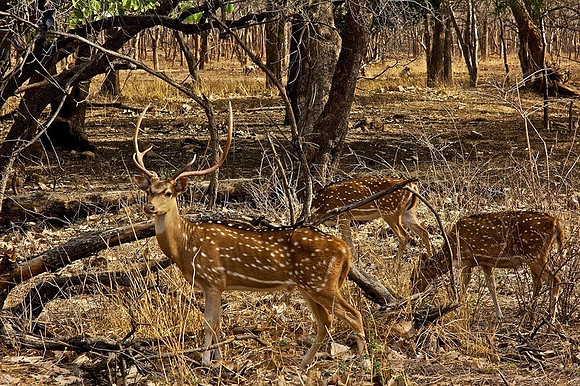
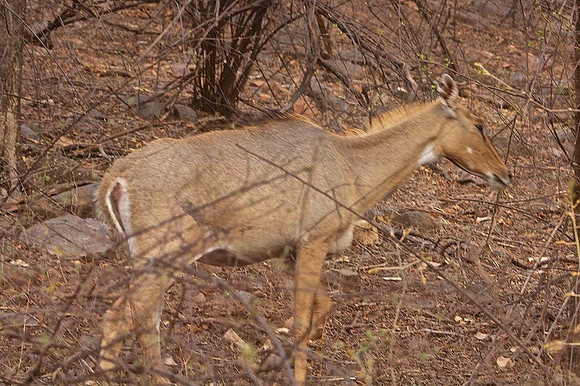
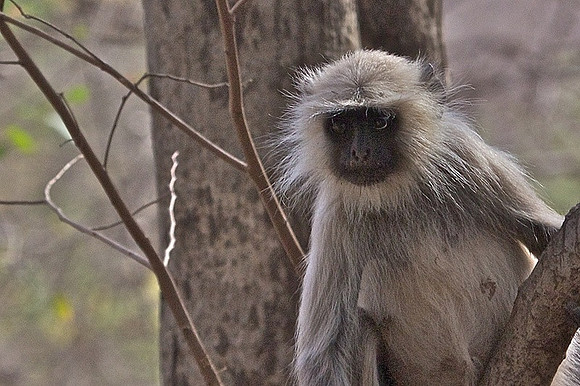
And we saw more animals.
A 6-point Spotted Deer buck.
The horse-like Neelgai Antelope, aka the Indian Blue Bull
And more langurs.
After our game drive, our guide took us to a NGO, Dastkar Ranthambhore, where women learn to make and sell local crafts. We watched the women sewing.


They are keeping old-fashioned block printing alive. Our guide explained the owner runs the only store in Ranthambhore where all the profits go back to the women.

No cuts for tour guides, etc. This was a great gift shop--and to be honest, not everything we bought was for someone else.
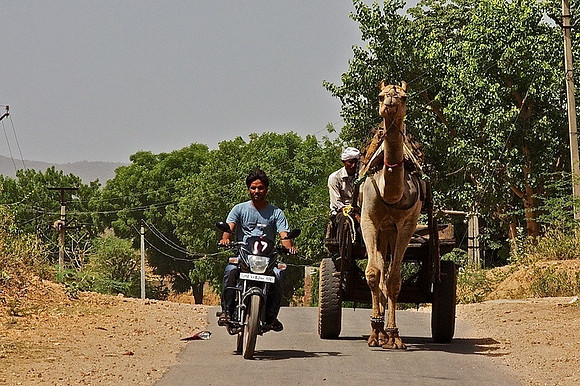
Heading back for lunch, camel carts joined us on the road back to the lodge.
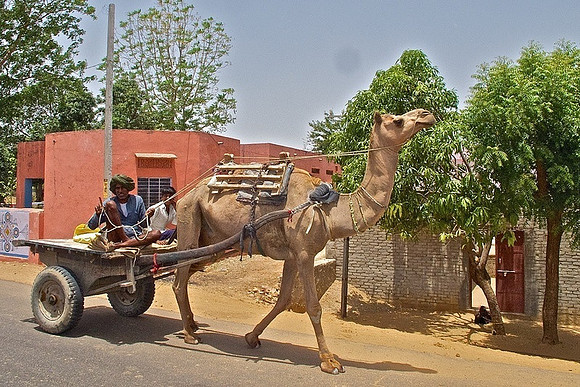
We loved the juxtaposition of the cart and motorcycle...the evolving rural India.
After lunch it's tiger hunting again. Our guide, Salim, knows this park like the back of his hand. His father actually was in charge of the drivers years ago. He continues the tradition as president of the local tour guides. We head to an area where two 18 mo. old males joined their mother on her kill yesterday. Today, we find one male in the brush. He's hot so he finally walks toward the waterhole near the road and-- you guessed it--backs in to get a drink.
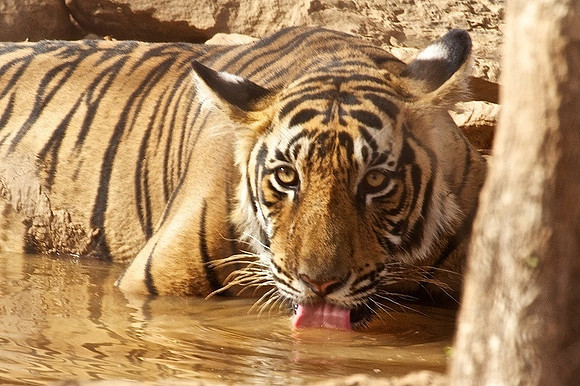
The road by watering hole provides a small viewing area, and all the cars and trucks jostling for position bothers the tiger.
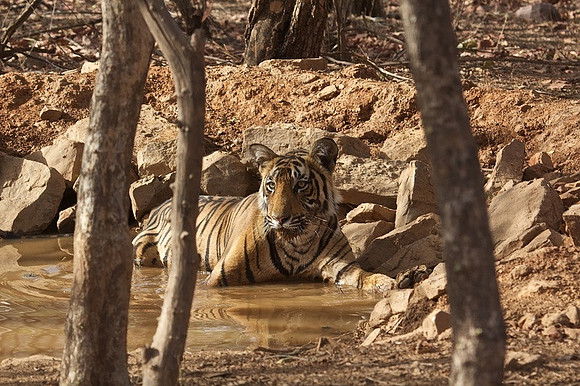
It's just not quiet.
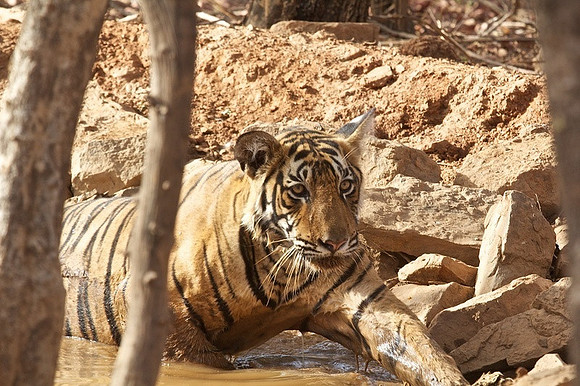
He gets up and urinates in the pool before moving back into the brush.
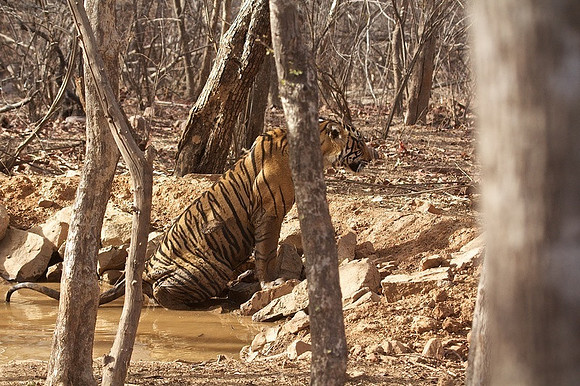
(Salim explains this is a safety mechanism. Urine dissipates in the water, keeping young tigers safe from adult males who might try to find and kill them.) And what to our wondering eyes should appear? His brother is also waaay back in the brush. Two (large) tiger cubs. These look huge to us, but in the Tiger-world, they are still babes. The noisy viewers have obviously intruded on these tigers, so we leave hoping others will give them some quiet, too.
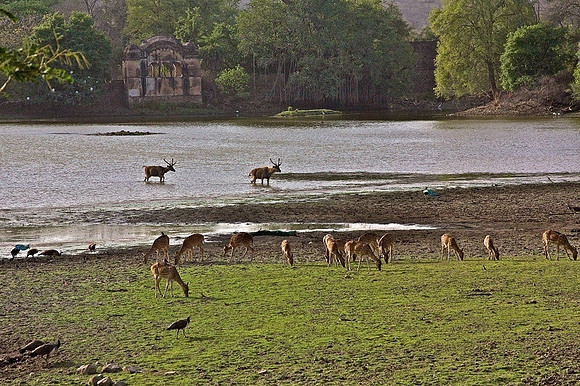
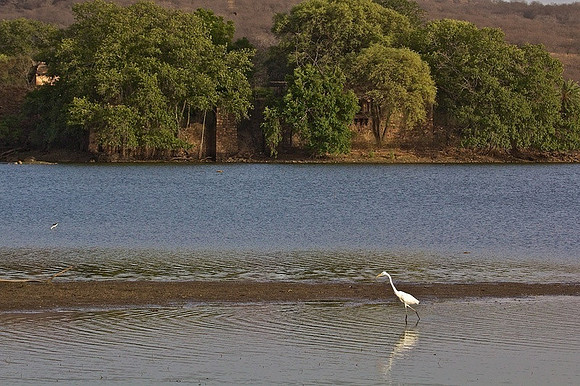
We head to the huge lake area now dominated by Mach Li's (the oldest tiger in the park) daughter. The daughter challenged her mother when she came of age and Mach Li had to leave. It's cooler here, and there's an amazing variety of wildlife. Samba deer wade in the Padem Talao (lake) before the Raj Bagh ruins.
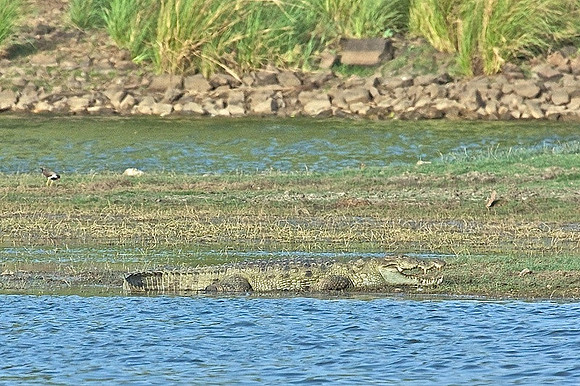
Crocodiles bask on the shore and cruise the lake.
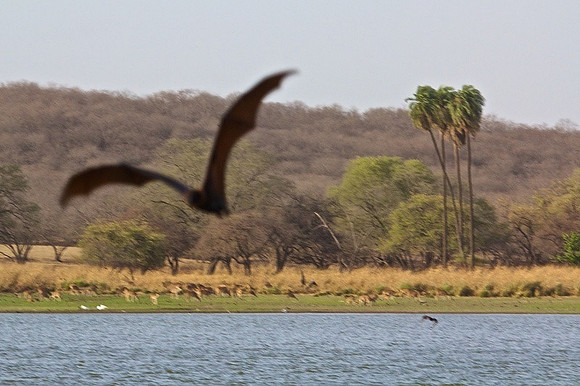
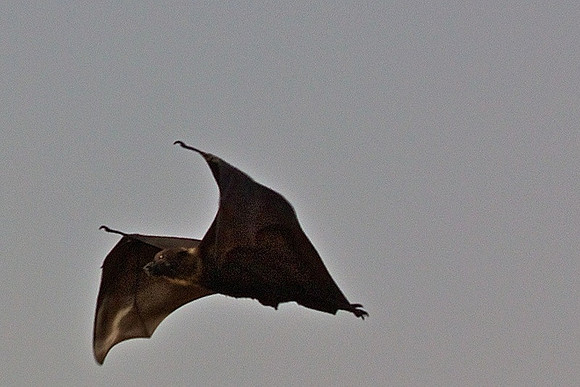
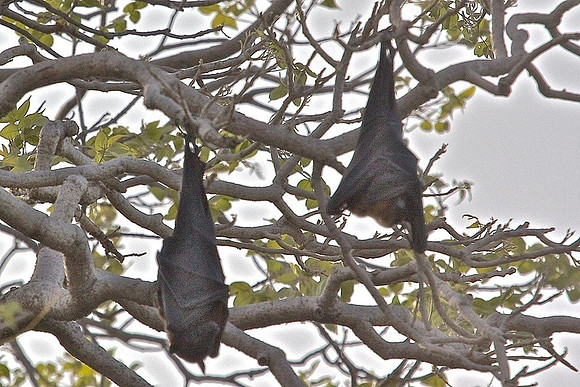
We see squadrons of fruit bats, some carrying babies, do touch-and-goes in the water before perching on a nearby flame tree.
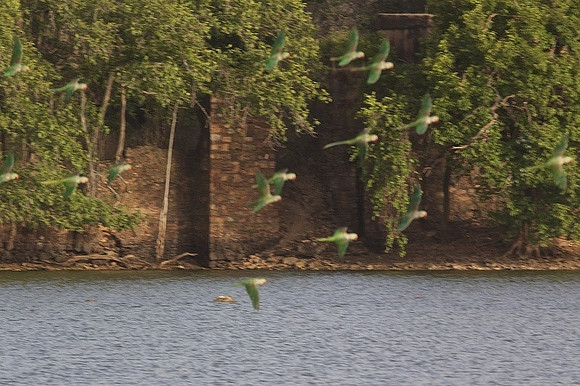
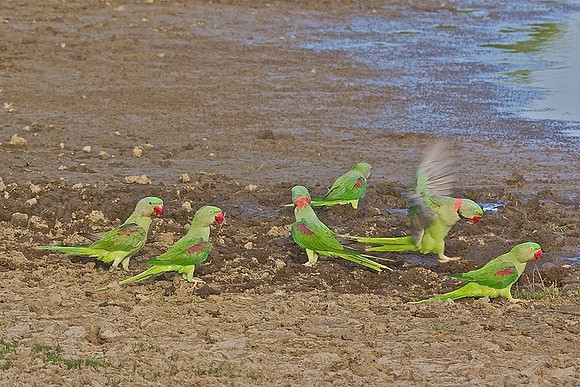
Egrets, and a flock of rose-ringed parakeets land in front of the Jogl Mahal ruin.
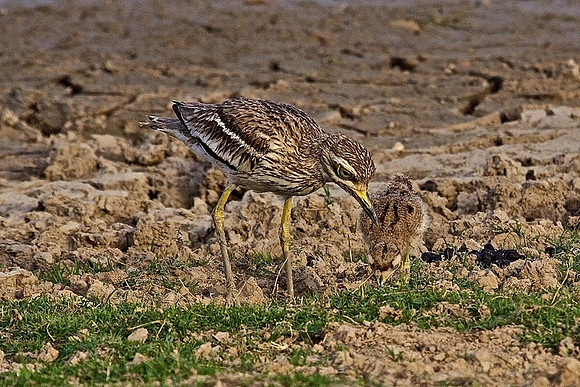
A mother Ticknee watches over her baby at the shore.
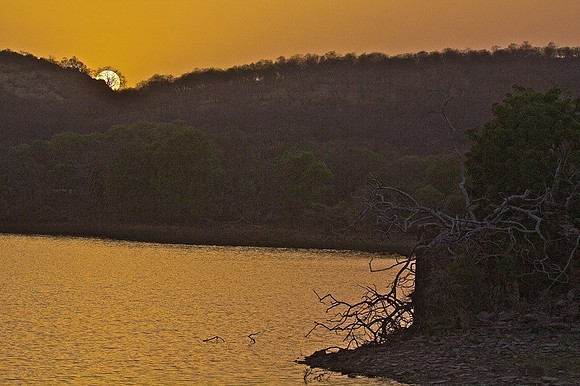
We relax with a golden sunset over the lake and enjoy the sounds and sights. If you could record this, it would be more peaceful than a rippling brookll!