Morning came early (again 0500) but we were excited. We know we were lucky to see the tigers. But this is the “sure thing” that’s the anchor of the trip.
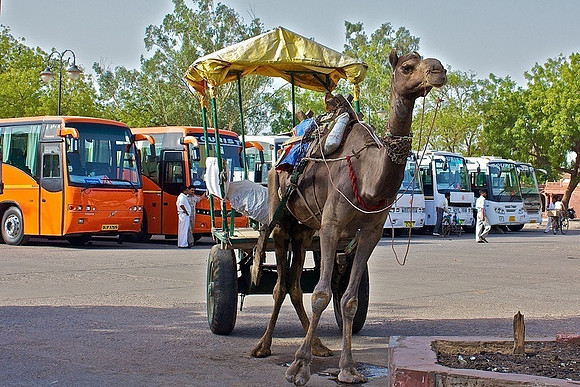
We must stop several blocks from the Taj and transfer into the three-wheel motorbike vehicles. The Indians are trying to reduce pollution around the Taj…it was turning the extremely hard marble yellow. Busses and camel carts also fill the parking lot.

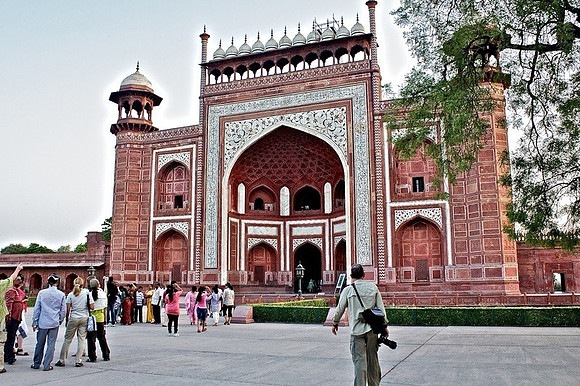
Our first sight is a beautiful pink building—not unlike the Taj but we thought it was white. Well, this is only the outer gate. They sure didn’t skimp on effort.
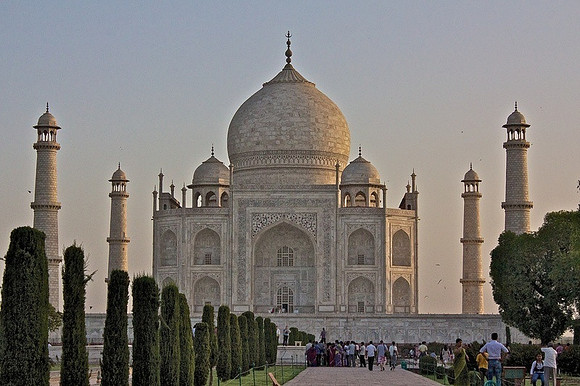
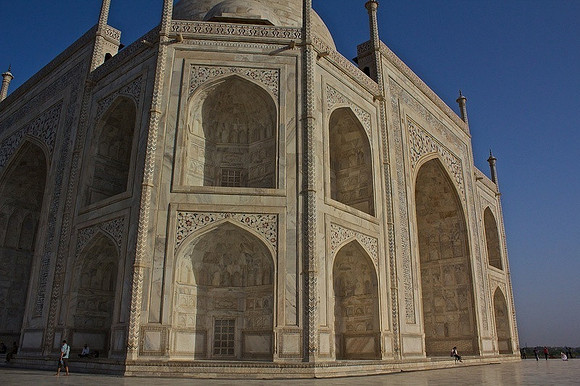
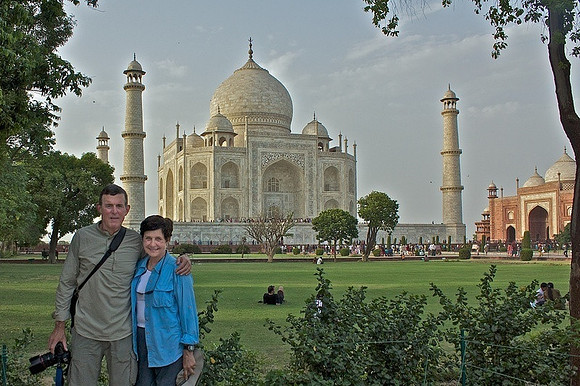
Walking on to the main ground, the Taj Mahal really was breath taking.
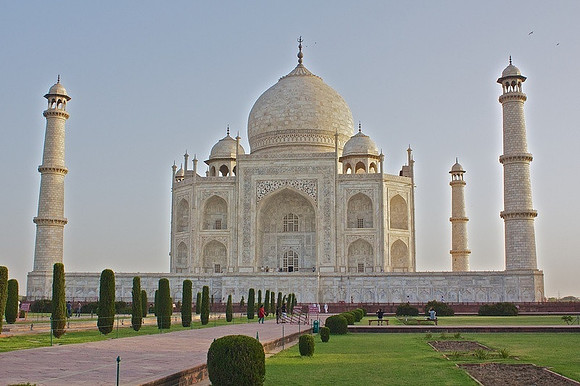
The white marble mausoleum, our last World Heritage Site, was relatively cool and there were no crowds at this hour. Time for more Kodak Moments.
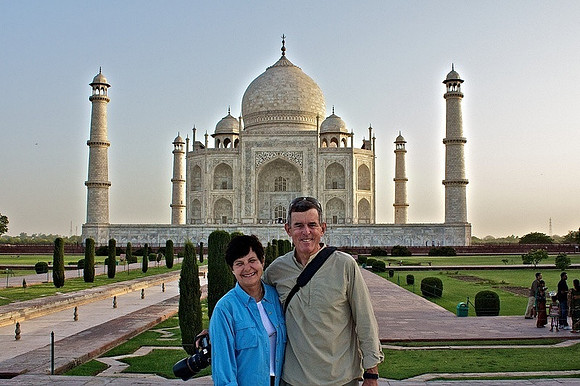
Agra was the capital of the Mughal Empire in the 16-17th centuries. Emperor Shah Jahan built this as a memorial to his wife, Mumtaz Mahal, who died in childbirth. One of the seven wonders of the modern world, it is an example of Islamic architecture—everything is symmetrical and precise. What is on the left is on the right. Her tomb in in the center of the building with a carved marble window facing Mecca and overlooking the Riverv Yamuna.
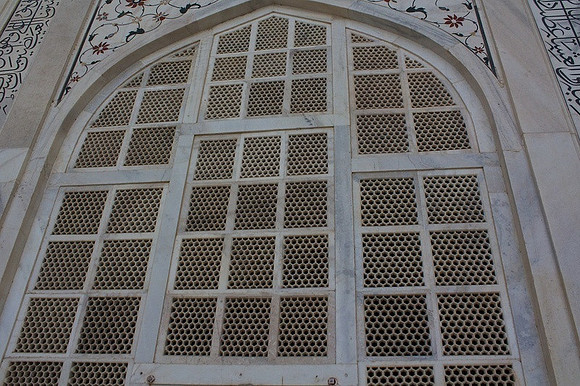
Unlike most other buildings, this was carved out of white marble, unique to India.

It is so hard (more on the carving later) it is virtually impenetrable—close to the hardness of a diamond.
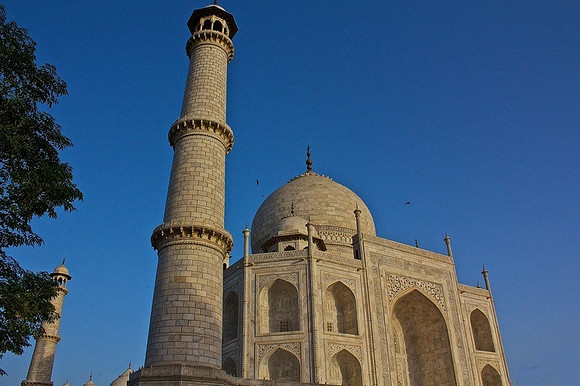
The marble of the Taj has the unique ability to glow differently depending of the light. In the morning—part of the reason we came so early—it is bathed in a pink glow. Midday, the white hot sun envelopes the structure. We will come back in the evening to catch the warm gold glow from the setting sun.
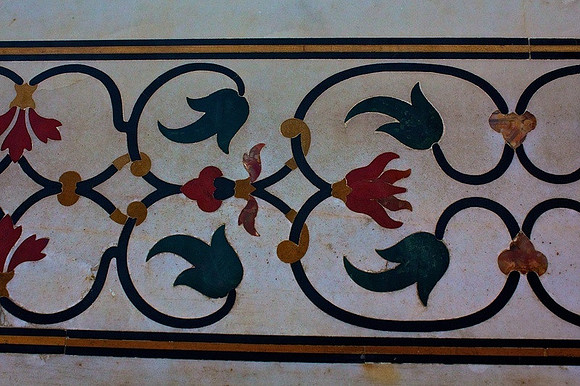
A bit of history...The Taj mixes traditional Persian and Hindustani decorative elements. It took 22 years to build—12 of those were spent on the inlay of the ornate semi-precious jewel decoration, including orange carnelian, multi-colored agates and chalcedonies, blue lapis lazuli, bloodstone, garnet and jasper. The carnelian has the unique ability to glow when light travels through it.
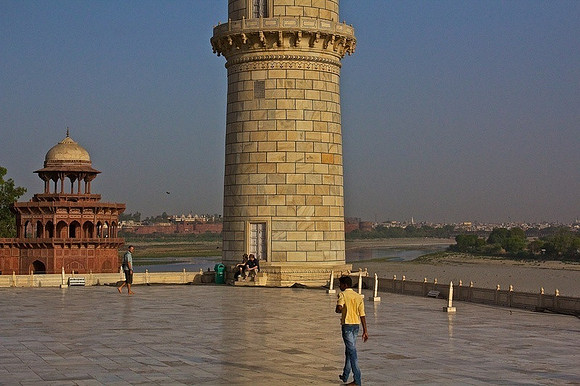
The Taj was built with the four minarets at the corners leaning slightly outward. They were designed this way for safety. In case of ground tremor, they would collapse away from the building.
The minaret was striking, silhouetted by the rising sun.

The Taj was built in “perfect” symmetry and some thought of it as an affront to the gods because of its perfection.
When the emperor’s son deposed his father, the son had the old man imprisoned in the nearby Red Fort. From the back of the Taj, you can see the Red Fort and the city in the diistance.
When the old emperor died, the son placed his tomb off to the side of his wife in the Taj. This made a notable break in the symmetry of the tomb and was said to appease the gods.
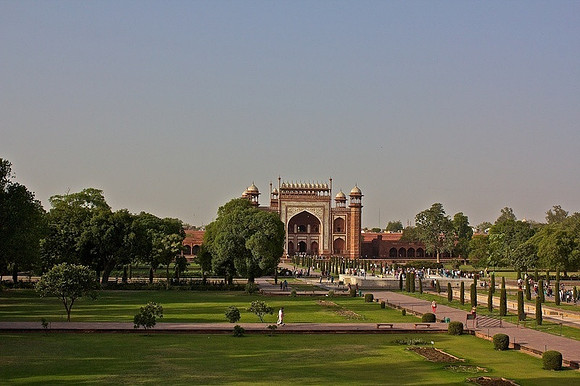
A view of the entrance from the Taj steps.
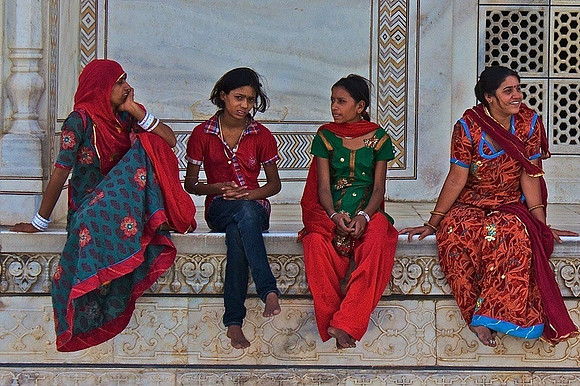
Visitors relaxed on the grounds.
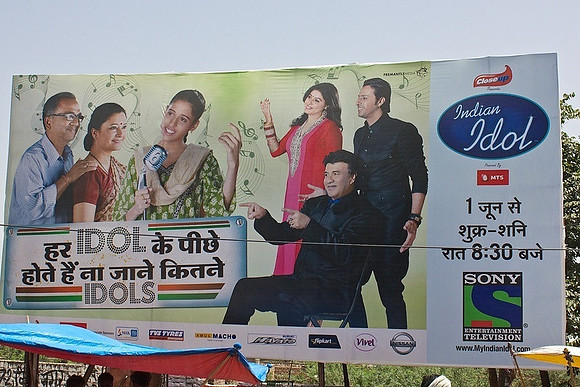
As we left, this billboard gave us a laugh.
After breakfast at the hotel, we headed out to tour the Red Fort.
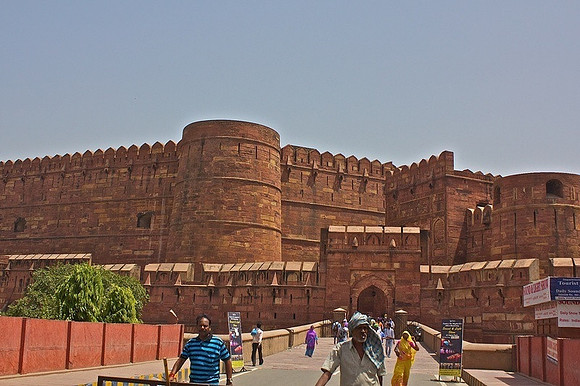
Another World Heritage Site, the Red Fort was originally a Hindu fort. It is an example of Mughal architecture. The entrance was large enough to admit riders on elephants.

The fortress was protected by a drawbridge and two moats, one was a jungle moat with lions and tigers and the other contained crocodiles. They were effective barriers against invasion.
Amazing architecture.

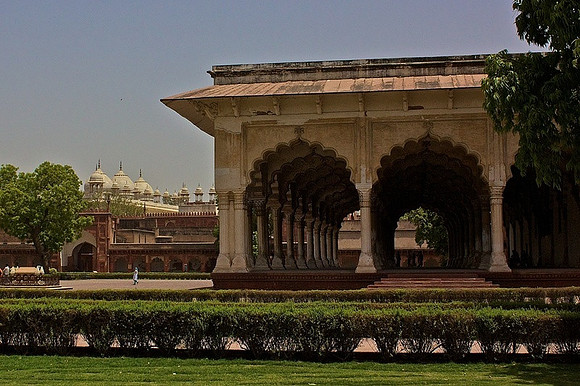
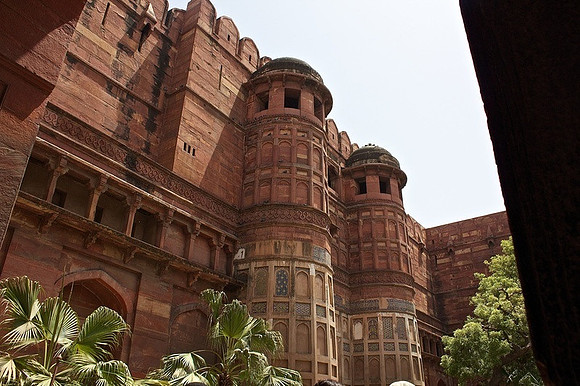
The fort was the site of a battle during the Indian rebellion of 1857, which caused the end of the British East India Company's rule in India.
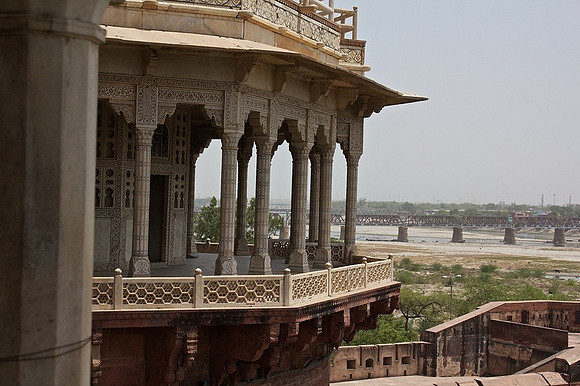
We also visited some local artisans practicing ancient art forms.
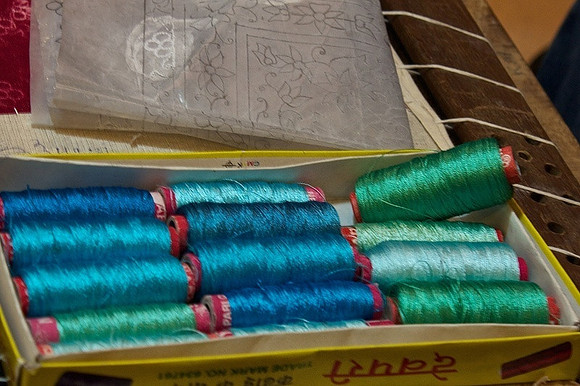
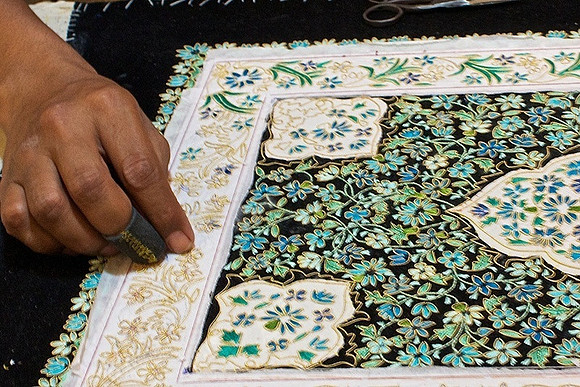
Our first stop was a factory with craftsmen creating intricate silk embroidery using ancient patterns.

Next we visited a fascinating factory creating semi-precious stone marble inlays using the same hard marble and designs we had seen at the Taj. We saw the men create the tiny pieces of flower designs with ancient grinding wheels—smaller replicas of the huge designs we had seen that morning.
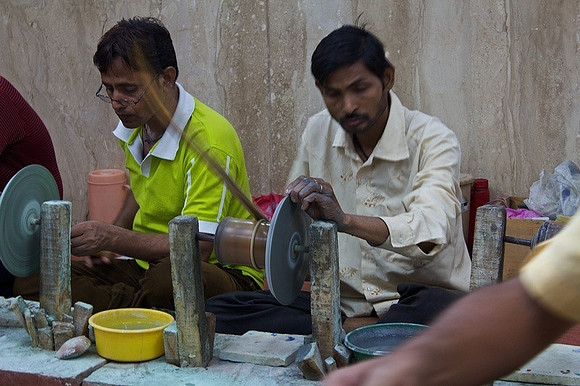
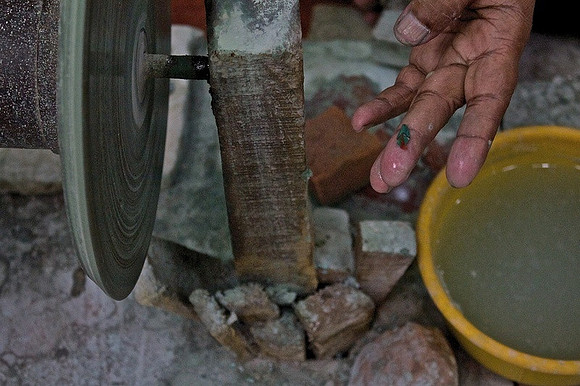
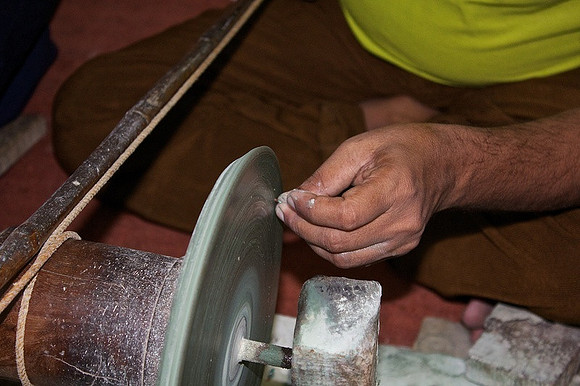
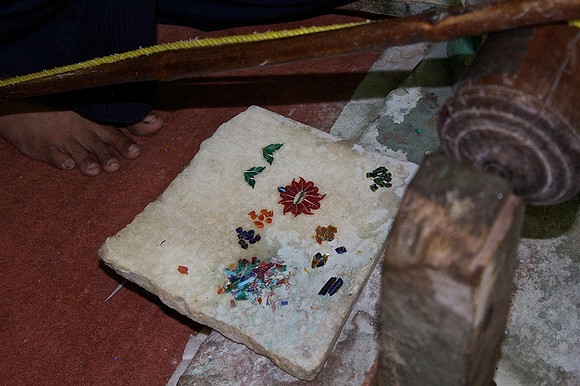
The pieces were then moved to a man who carved the shapes out of the diamond-hard marble with a hand-held spike. How did they do this to the huge inlays all over the Taj?
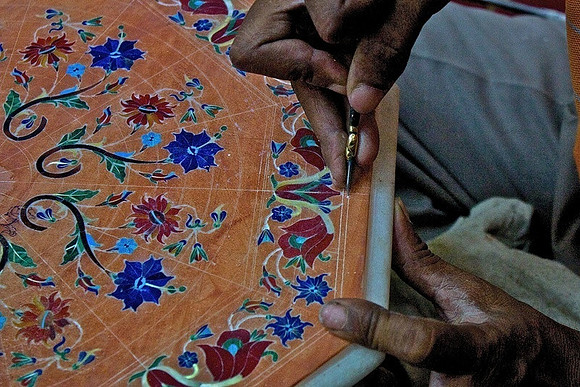
After gluing each piece in place, using a secret process, the full surface is evened out with sandstone. These pieces are as large as dining tables and as small as figurines. And most amazing, the guide took a small marble table and hit it on a piece of wood hard enough to shatter most slabs of stone. The piece remained in tact, underscoring why the Taj remains in its original glory after all these years.
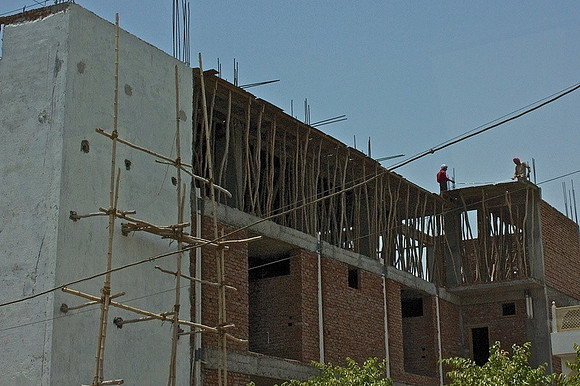
On the way back to the hotel, we saw bamboo scaffolding at a building site...just like we saw in China. The country is a real mix of the old and new.
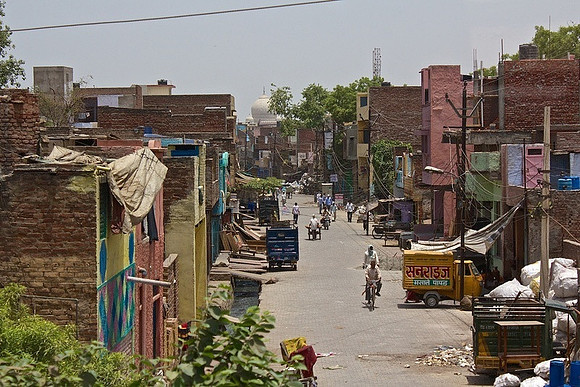
That evening we went back to the Taj to see it in the evening glow. We passed a neighborhood with the Taj in the background.
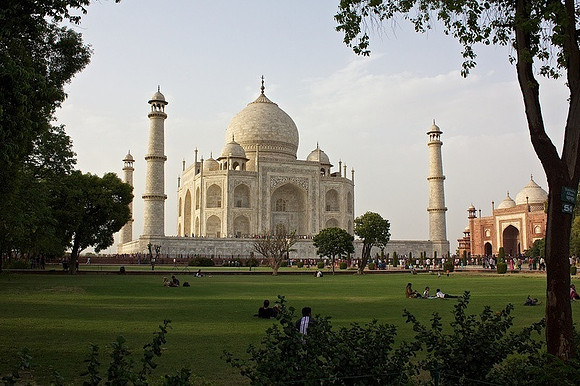
The sun hit it from the opposite side and some of the tiles actually glistened in the gentle evening light.
The entrance was jammed looking from the Taj steps.
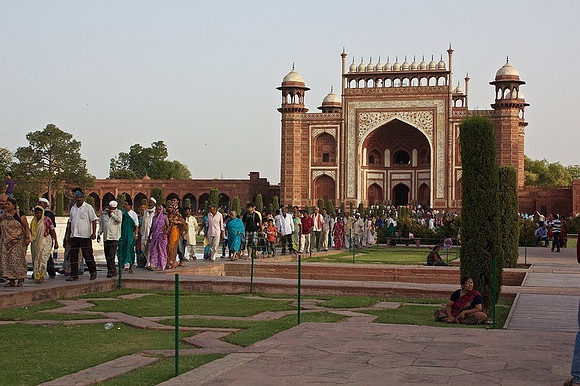
And there were some interesting faces in the crowd.

And one last sunset photo op for us.
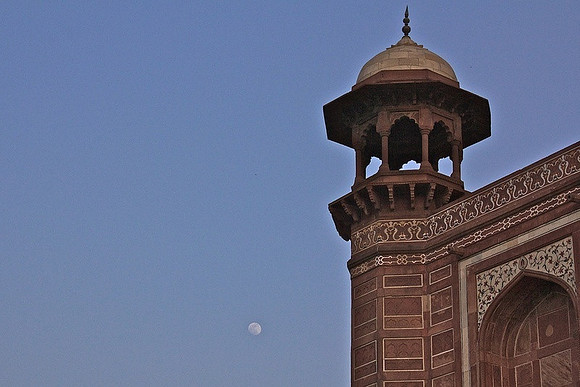
The moon was rising as we left the park.
Day 12- The next day we drove back to Delhi and stayed in a day room at the fantastic Trident Hotel. A gorgeous place and a perfect site for our 11 PM airport pick up—apparently most flights east leave Delhi in the wee hours of the morning.
Leaving at 1 AM we hit Frankfort for an 8-hour layover. Another day room at the attached Sheraton hotel made the flight home easy. After the daily 4:30 AM tour wake ups and the intense Indian heat, we were beat. The final trip back to the US left us exhausted but pleased. India and the Taj were amazing and we SAW TIGERS!
Join us later this summer as we report back from Kenya and Tanzania, following the Great Nigration.

